September 22, 2026
The best paper quality custom notebook printing in 2026 comes down to three variables — paper weight, coating, and binding — not whichever printer shows up first in a search. This guide ranks six paper-and-binding combinations for custom notebooks by how they actually perform, from everyday planners to photo-heavy design journals, so you can match the stock to the job before you place an order.
Best overall: 70 lb uncoated text with Wire-O binding. Best for photo-heavy notebooks: 100 lb gloss text with perfect binding. Best budget option: 60 lb uncoated text with plastic coil binding.
Paper choice decides whether a custom notebook feels premium or flimsy the moment someone opens it. A pen that bleeds through 60 lb stock, a spine that won't lay flat during a meeting, or a cover that creases after two weeks in a tote bag — all three are paper and binding decisions made before printing, not after.
Custom notebook printers like Publishing Xpress offer control over both the interior stock and the binding on the same order, which matters for anyone printing branded notebooks, subscription box inserts, or event journals in 2026 without a large minimum order requirement standing in the way. Get the paper and binding pairing wrong and no amount of cover design fixes it.
| Option | Best for | Standout feature | Key limitation |
|---|---|---|---|
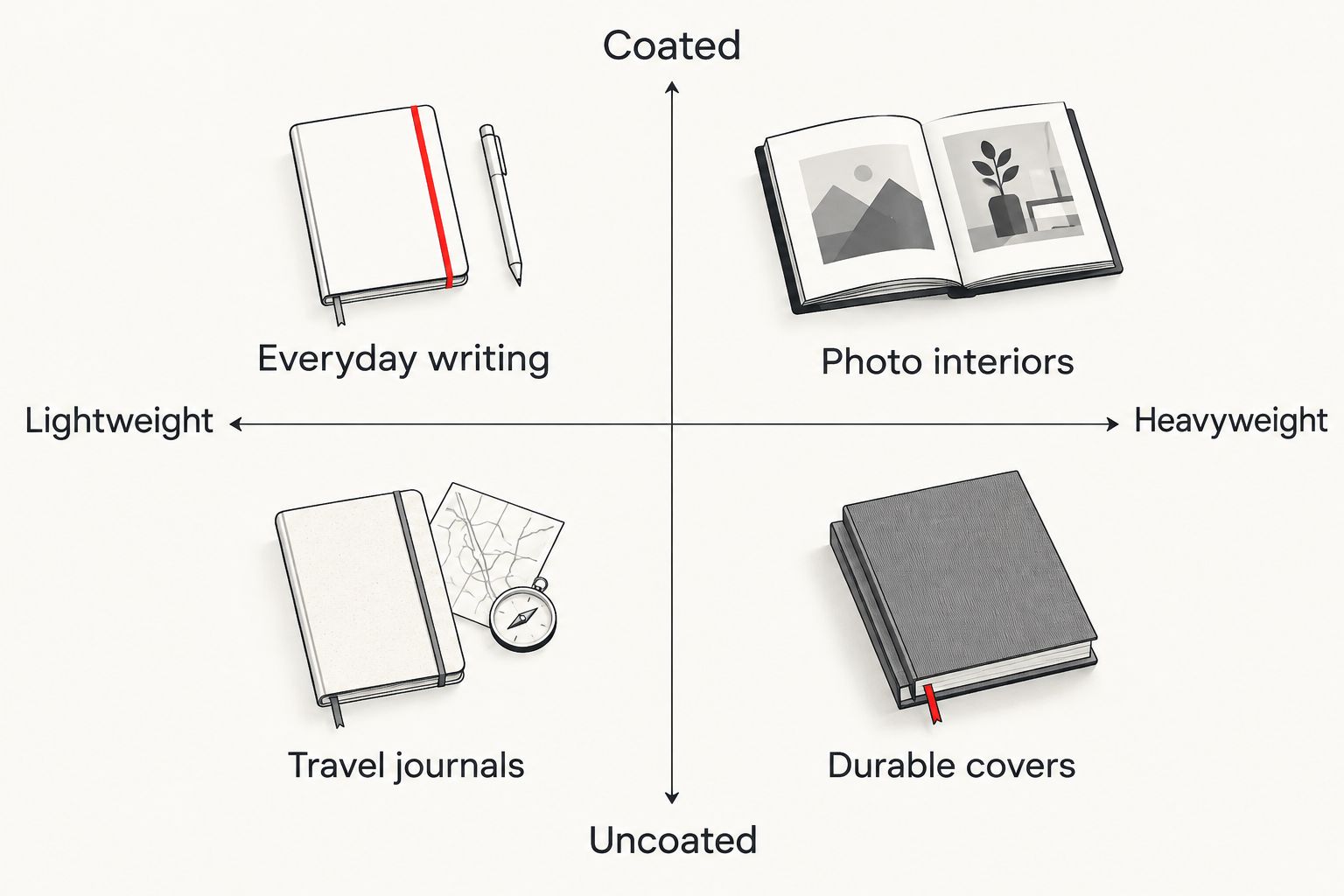
| 70 lb uncoated + Wire-O | Everyday notebooks | Lays flat, resists pen bleed-through | Exposed coil can bend |
| 100 lb gloss + perfect bound | Photo-heavy interiors | Sharp color reproduction | Doesn't lay fully flat |
| 60 lb uncoated + plastic coil | Travel journals, budget runs | Light and packable | More ghosting between pages |
| 80 lb uncoated + saddle stitch | Slim notebooks under 60 pages | Lowest-cost binding | Page count ceiling |
| 100 lb cover stock | Durable gift covers | Holds foil and embossing | Adds thickness only, not interior quality |
| 30% recycled uncoated | Eco-conscious brands | Advertises recycled content | Slightly lower brightness |
This pairing prints interior pages on 70 lb uncoated stock and binds them with a Wire-O coil that lets the notebook fold flat on a desk or wrap fully around itself.
70 lb + Wire-O pros:
70 lb + Wire-O cons:
Best for: everyday notebooks that get opened, written in, and closed daily — planners, meeting notebooks, journals.
Verdict: Buy.
This option prints on 100 lb gloss or matte coated text stock and binds it with a glued perfect-bound spine, the same construction as a paperback book.
100 lb gloss pros:
100 lb gloss cons:
Best for: design portfolios, lookbooks, and visual journals built around printed photography or illustration.
Verdict: Buy — for visual-first projects only.
A lighter 60 lb uncoated interior stock bound with a plastic coil, built to keep the finished notebook thin, light, and lower cost than Wire-O.
60 lb coil pros:
60 lb coil cons:
Best for: travel journals, guest books, and short-run notebooks where weight and cost matter more than long-term durability.
Verdict: Buy for casual use; Skip for heirloom projects.
Mid-weight 80 lb uncoated stock stapled through the spine — the simplest and lowest-cost binding available for notebooks under roughly 60-80 pages.
80 lb saddle stitch pros:
80 lb saddle stitch cons:
Best for: slim promotional notebooks, single-event journals, and short handouts under about 60 pages.
Verdict: Buy for short runs; Wait if the page count runs long.
This is a cover-stock decision, not a binding — a heavier 100 lb or 130 lb cover applied over any interior stock and paired with any of the four binding options.
100 lb cover pros:
100 lb cover cons:
Best for: corporate gift notebooks, branded client giveaways, and notebooks meant to survive a year of daily handling.
Verdict: Buy for gift and branded runs.
Uncoated interior stock milled with recycled fiber content, available in the same weight ranges as virgin paper.
Recycled stock pros:
Recycled stock cons:
Best for: nonprofits, sustainability-focused brands, and subscription box companies marketing eco credentials.
Verdict: Buy if brand story matters more than maximum brightness.
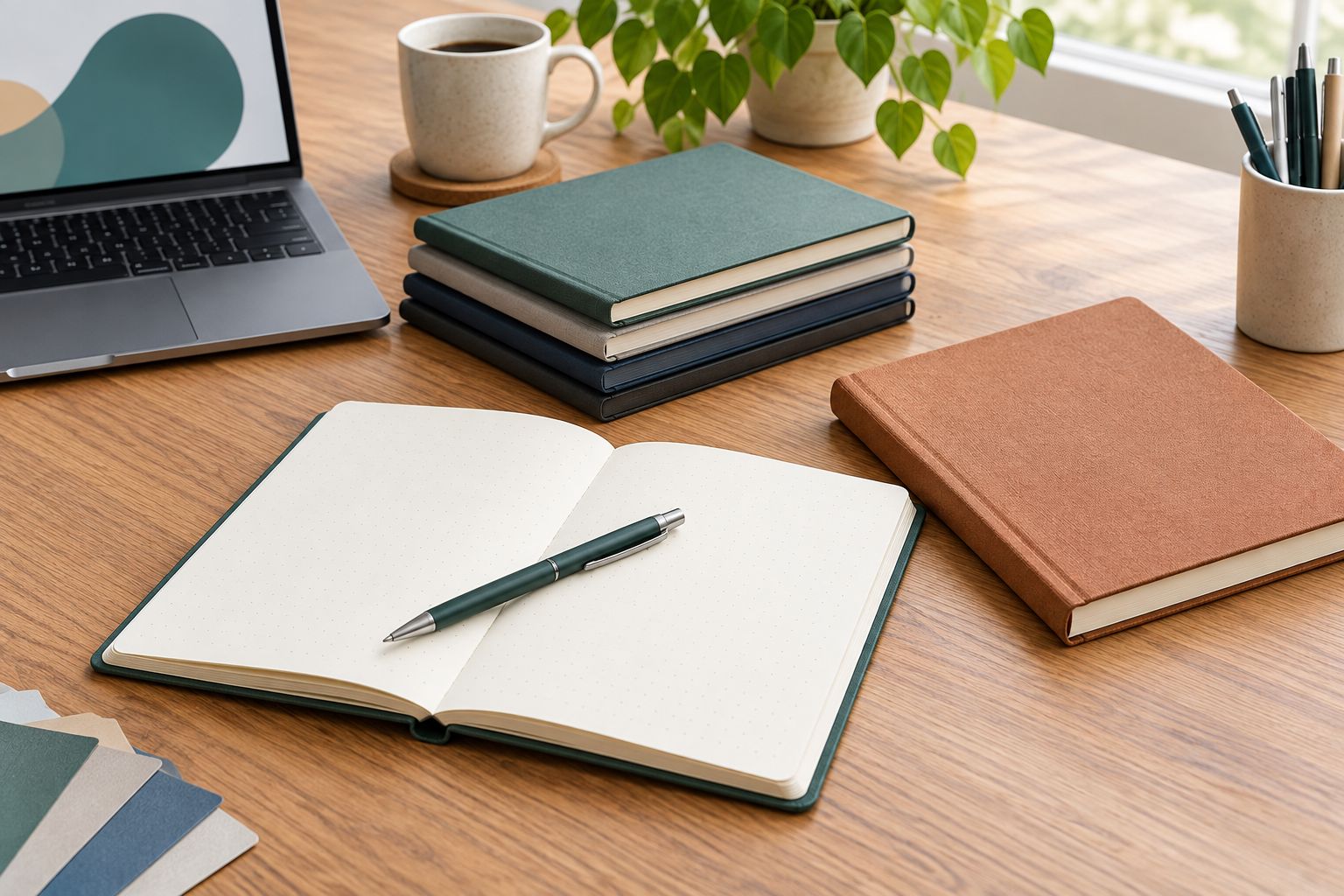
Each pairing was scored against the criteria above: paper weight, coating, brightness and opacity, binding method, cover stock, and recycled content. The 70 lb uncoated + Wire-O combination ranks first because it's the only pairing that scores well on writability, lay-flat function, and durability at the same time — the other five options each trade one of those away for a specific use case.
Get your notebook paper matched to the job
Compare stock weights and binding before you print your custom notebook run.
Still undecided? Go with 70 lb uncoated text and Wire-O binding — it's the default that works for the widest range of custom notebook printing jobs in 2026, from corporate planners to personal journals. Switch to 100 lb gloss with perfect binding only if the notebook's job is showing off photos or design work, and drop to plastic coil with 60 lb stock only when the notebook needs to be light and the budget is tight.
What’s the best paper weight for a custom notebook?
70 lb uncoated text stock is the best balance for custom notebooks in 2026 — heavy enough to stop pen bleed-through without adding excess bulk. Photo-heavy notebooks do better on 100 lb coated stock instead.
Is coated or uncoated paper better for a notebook people write in?
Uncoated paper is better for handwriting because it absorbs ink instead of letting it bead on the surface. Coated stock is better reserved for notebooks built around printed photos or color graphics.
Does binding affect paper quality on a notebook?
Binding doesn’t change the paper itself, but it changes how the paper performs — Wire-O and plastic coil let pages lay flat, while perfect bound and saddle stitch notebooks close more like a book. Pick binding based on how the notebook will actually be used, not just looks.
What’s the best custom notebook printing option for corporate gifts?
100 lb or heavier cover stock paired with Wire-O binding holds up best for corporate gift notebooks that travel in bags for months. The heavier cover resists creasing and takes foil stamping or embossing cleanly.
Does recycled paper stock affect print quality?
Recycled stock at around 30% content performs close to virgin paper for writing and printing, with brightness running slightly lower under color print. Uncoated recycled stock is a solid match for nonprofits and sustainability-focused brands.
Can I mix cover stock and interior stock on the same notebook order?
Yes — cover stock and interior text stock are separate decisions and can be paired independently, which is why a heavier cover works with any of the four binding options. A durable 100 lb cover can wrap around a lighter 70 lb interior without conflict.
Is there a minimum order for custom notebook printing?
Custom notebook printers built for short runs, including Publishing Xpress, don’t require large minimum orders, which matters for one-off gifts or small business batches. Check the current order details on the printer’s site before submitting files.
Which binding lays flattest for writing?
Wire-O binding lays the flattest and folds back a full 360 degrees, followed closely by plastic coil. Perfect bound and saddle stitch notebooks close more like a traditional book and don’t fold back as far.
The cover stock decision gets skipped more often than any other paper choice on a custom notebook order — buyers pick the interior weight carefully and then default to whatever cover stock is standard. A 100 lb cover instead of a standard-weight one is the single cheapest upgrade that changes how long a notebook survives daily use in 2026, and it works with any of the four binding options already on the table.
© 2026 Publishing Xpress. All Rights Reserved.