November 3, 2026
Best overall: Publishing Xpress custom cookbook printing with plastic coil binding for hands-on culinary classes. Best for demonstration manuals: Wire-o printing; best for alumni recipe collections: perfect bound printing; best for short course booklets: saddle stitch printing—this 2026 guide compares the four services by classroom use, not just appearance.
A culinary-school cookbook has to work beside a mixing bowl, not just look good on a shelf. Students need readable quantities, clear methods, and pages that stay open while they work.
Publishing Xpress offers four binding options, with black-and-white or color printing. The decision starts with how students will use the finished book: cooking from it, studying it, or keeping it after graduation.
Choose the binding before you finish the layout. A recipe placed too close to a punched edge or glued spine becomes harder to use, regardless of how carefully you edited the ingredients.
For a culinary program ordering in 2026, these criteria matter more than a generic printer ranking:
A binding is not a spill-protection system. Keep paper cookbooks away from wet preparation areas, and ask about the actual paper and cover options rather than assuming that a particular finish makes a book waterproof.
These are four printing services from one provider, ranked for distinct culinary-school uses. The comparison focuses on binding behavior rather than unsupported claims about competing companies.
| Rank and service | Best for | Standout feature | Key limitation |
|---|---|---|---|
| 1. Plastic Coil Printing | Hands-on student cookbooks | Pages lie flat and fold back | Punched binding edge needs layout clearance |
| 2. Wire-o Printing | Instructor demonstration manuals | Flat opening with paired wire loops | Wire loops can deform if crushed |
| 3. Perfect Bound Printing | Alumni recipe collections | Glued spine with a paperback format | Not designed for hands-free flat opening |
| 4. Saddle Stitch Printing | Short workshop recipe booklets | Folded sheets secured through the fold | Maximum of 80 pages |
Plastic coil binding threads a continuous plastic spiral through holes along the page edge. The pages lie flat, and students can fold the book back when counter space is limited.
Plastic coil is the default recommendation for a cookbook used during practical classes. It supports reading a recipe without repeatedly holding the book open, leaving students free to handle equipment and ingredients.
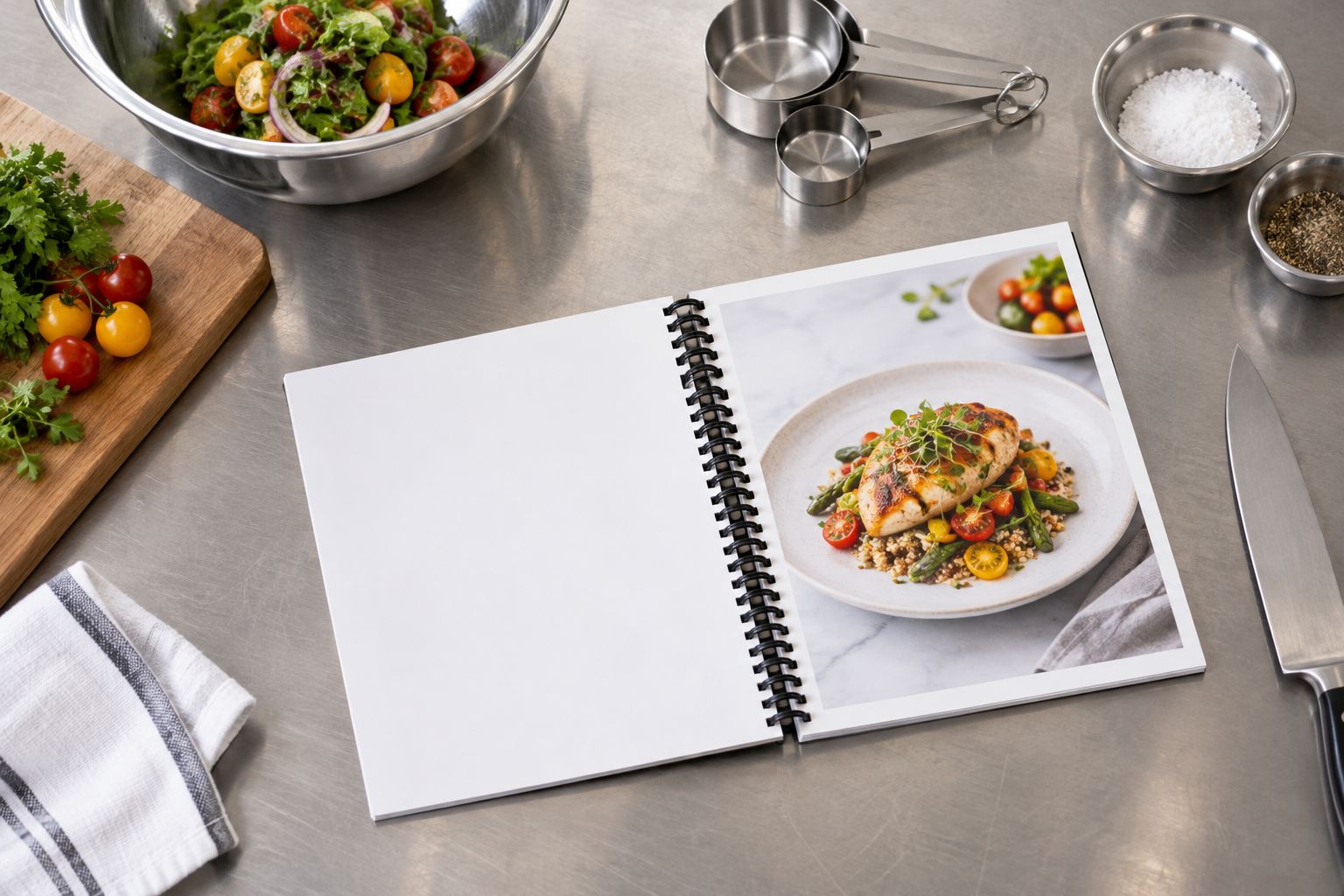
For your 2026 class edition, place ingredients and method steps together wherever the layout allows. Put optional background notes elsewhere rather than making students turn a page midway through an essential instruction.
Best for: Student cookbooks used during hands-on kitchen instruction.
Verdict: Buy plastic coil printing for the working classroom edition.
Wire-o binding holds punched pages with paired wire loops. It opens flat and allows pages to turn back, making it useful for an instructor who needs to consult a teaching sequence while demonstrating a technique.
Choose Wire-o when your cookbook also functions as an instructor reference. Build each spread around the recipe, teaching notes, and demonstration checkpoints that belong together.
Do not treat Wire-o as automatically tougher than plastic coil. The materials behave differently: wire can deform, while plastic coil flexes. Choose around handling and storage rather than an unsupported durability ranking.
Best for: Instructor demonstration manuals that stay open beside the teaching station.
Verdict: Buy Wire-o printing when flat opening and organized teaching spreads matter most.
Perfect binding joins the pages to a wraparound cover with adhesive at the spine. The result is a paperback book suited to a school recipe collection, graduate anthology, or culinary-program keepsake.
Perfect binding is not the first choice for a book students must consult hands-free during cooking. It is the better fit when the primary purpose is reading, sharing, and retaining the collection.
For a 2026 graduating-class cookbook, organize recipes by a clear editorial principle: course, technique, or contributor. Choose one and carry it through the contents page, section openings, and recipe headings.
Best for: Alumni recipe collections and graduation keepsakes.
Verdict: Buy perfect bound printing for the commemorative edition; skip it for hands-free kitchen use.
Saddle stitching secures folded sheets with staples through the center fold. It suits a focused collection for a pastry workshop, introductory cooking class, or short professional-development course.
Publishing Xpress saddle stitch cookbook printing has an 80-page maximum. Keep the booklet focused rather than forcing a full curriculum into a format intended for shorter material.
Saddle-stitched page counts follow folded-sheet construction, generally in multiples of four. Confirm how the cover is counted before you finalize the file; do not add filler recipes simply to solve pagination.
Best for: Short workshops with a tightly defined recipe selection.
Verdict: Buy saddle stitch printing for a focused booklet within the page limit.
Plastic coil ranks first because this guide prioritizes a student's ability to use recipes while cooking. Wire-o takes the instructor-reference slot; perfect binding serves the keepsake edition; saddle stitch serves the short workshop.
This is a suitability ranking based on binding construction and the stated service limits, not a laboratory durability test. A change in the book's purpose changes the recommendation.
Do not compare quotes until the specifications match. Give each printer the same page count, finished dimensions, color requirements, binding, quantity, and required delivery date so you are comparing the same project.
A clear file handoff starts with approved recipes, not a nearly finished cover. Use this sequence for your 2026 edition so that layout decisions follow the teaching content.
Have the responsible instructor approve quantities, units, yields, method order, and terminology. Check that every ingredient appears in the method and that the method does not introduce an unlisted ingredient.
For contributed recipes, standardize the format before placing them into the book. Keep the contributor's voice in introductions, but use consistent headings for ingredients, preparation, cooking, and serving.
Decide whether students will cook from the book, instructors will demonstrate from it, or graduates will keep it. Select the binding around that job before setting the inner margins.
Make a paper mockup at the intended finished size. Place it on a typical workstation and check whether the recipe remains readable where the book will actually sit.
Keep essential instructions easy to locate. Use consistent recipe headings, clear ingredient lists, and visible distinctions between preparation notes and method steps.
Reserve binding clearance before placing photos or annotation areas. If students will write in the cookbook, ask about suitable paper and assess a sample rather than assuming every surface handles pencil equally well.
Review the exported print file, not only the editable document. Check page order, symbols, fractions, image placement, contents references, and any text near the trim or binding edge.
Name a final approver within the school. Recipe corrections and design approval should be settled before production begins.
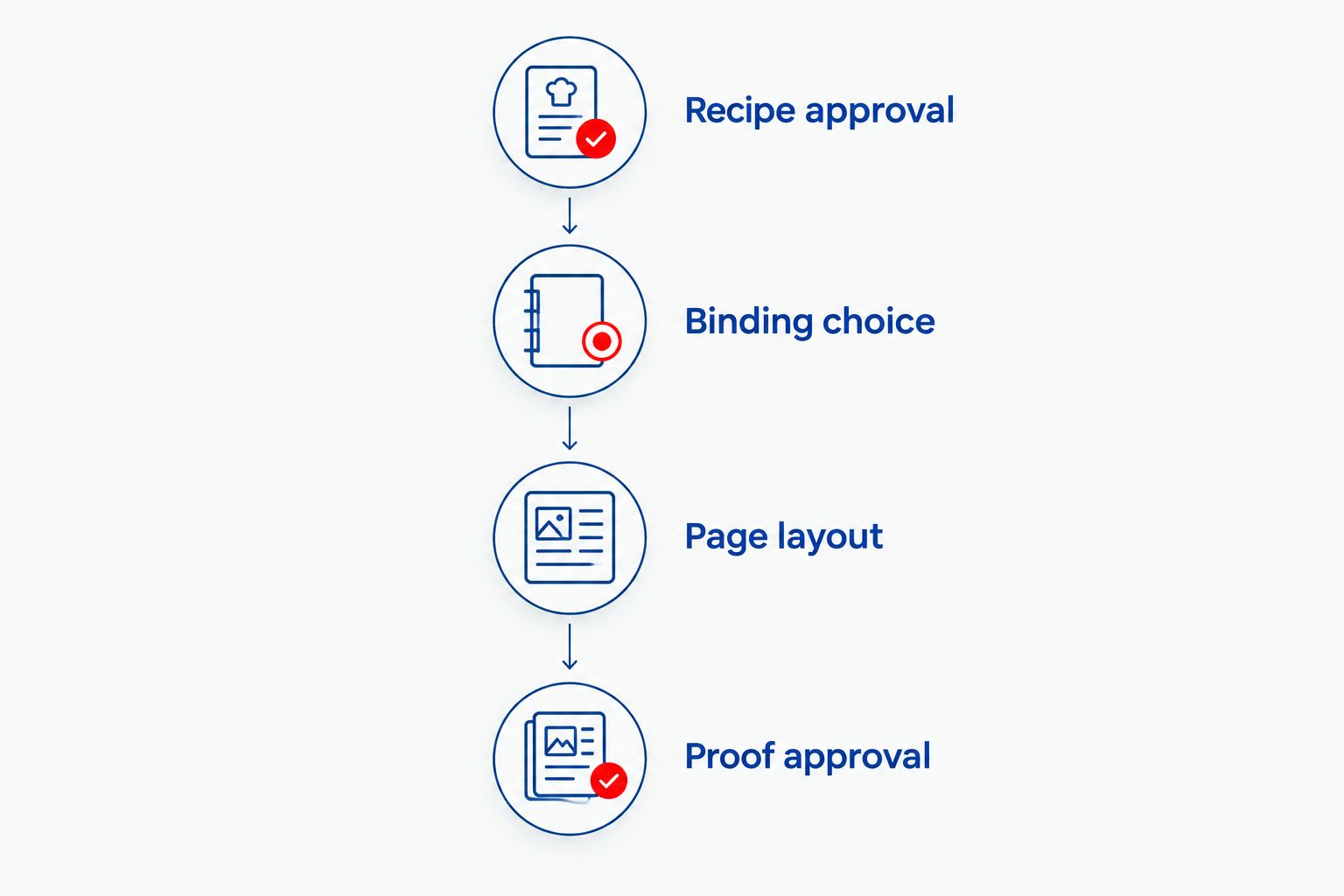
Publishing Xpress ships in 4 to 6 days after proof approval. That is not the same as having the cookbooks in your classroom within that period.
Work backward from the date students need their books. Allow separate time for recipe review, file preparation, proof corrections, shipping, and transit; confirm the schedule before committing to a course launch.
Choose Publishing Xpress custom cookbook printing with plastic coil binding for hands-on culinary-school classes. It is the clearest default when students need the book open beside their work.
Choose Wire-o for the instructor's demonstration manual, perfect binding for an alumni collection, and saddle stitch for a short workshop booklet. Each format solves a different problem; none removes the need for a readable, carefully checked recipe layout.
For your 2026 order, settle the classroom purpose, final page count, binding, and copy count first. Then request the project-specific quote and confirm the delivery schedule.
What’s the best custom cookbook printing option for a culinary school?
Publishing Xpress custom cookbook printing with plastic coil binding is the best fit for hands-on culinary classes. Plastic coil lets students keep recipes open or fold the book back while working.
Is plastic coil better than perfect binding for a teaching cookbook?
Plastic coil is better for a teaching cookbook used during cooking because it lies flat and folds back. Perfect binding is better suited to a paperback recipe collection intended for reading and keeping.
Should instructors choose Wire-o binding for demonstration cookbooks?
Wire-o binding is a good fit for instructor demonstration cookbooks that need to open flat. Keep essential teaching notes beside the relevant recipe and protect the wire loops from crushing during storage.
What’s the minimum order for a culinary-school cookbook?
The minimum order is 25 copies. Count student, instructor, and departmental needs before deciding how many books to print.
How many pages can a saddle-stitched cookbook have?
The maximum saddle stitch book length is 80 pages. Confirm cover counting and folded-sheet pagination before completing the layout.
How long does a custom cookbook order take after proof approval?
Publishing Xpress ships in 4 to 6 days after proof approval. Allow additional time for transit and confirm the schedule against the date your class needs the books.
Can a printed culinary-school cookbook be waterproof?
Do not assume a printed cookbook is waterproof. Binding choice alone does not protect paper from liquids; confirm the actual materials and keep the book in a dry reference area.
What should a culinary instructor check in the cookbook proof?
Check ingredient quantities, units, yields, method order, page references, and binding clearance. Review the exported print file and have the responsible instructor approve the recipes before production.
Proof the cookbook at a workstation, not only at a desk. Open the mockup where a student will stand, put an empty bowl beside it, and follow a recipe's sequence without cooking.
That simple rehearsal exposes awkward page turns, hidden quantities, and missing space for notes. Fix those problems before approval, when changing the file is still straightforward.
© 2026 Publishing Xpress. All Rights Reserved.